
2025 Return Policy Survey:
MOST POLICIES LARGELY UNCHANGED DESPITE FINANCIAL PRESSURE
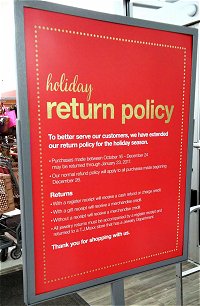 (BOSTON) -- Despite financial pressure from tariffs, inflation, and the costs associated with some $850 billion of merchandise expected to be returned by shoppers in 2025, most mainstream retail chains left their return policies largely unchanged or only made minor tweaks to them this year according to Consumer World's 22nd annual return policy survey. Amazon, Home Depot, Kohl's, and Best Buy were among the stores making some modest adjustments.
Most stores continue to offer extended holiday return periods whereby gifts purchased as early as October first, such as in Walmart's case, can be returned until mid- to late-January, considerably beyond the normal deadline. What hasn't changed is the complexity of stores' return policies that are designed in part to reduce return fraud which amounts to over $75 billion a year according to the National Retail Federation. The combined policies of the 11 chains surveyed amount to over 44,000 words and 126 pages of fine print. Gone are the days of simple return policies like "all returns in 30 days."
|
 For 30 years, Consumer World has served readers with the latest consumer news, money-saving tips, and independent investigations. It is your generosity (and not advertising alone nor corporate contributions) that keeps this site and Mouse Print* available as free consumer resources. So MrConsumer turns to you and humbly
 Noteworthy changes and novel return policies for 2025 include:
"Surprisingly, despite the many economic pressures that retailers are facing, most have not further tightened their return policies this year," said Edgar Dworsky, Founder of Consumer World®, a leading consumer education website. "Many still give customers more time to make holiday returns and haven't added new return shipping fees."
Summarized below are some chains with generous regular or holiday return deadlines and their return fees, if any, for online purchases:
| Amazon.com | January 31 for most items shipped Nov. 1 thru Dec. 31. Apple products deadline is January 15. Some returns have restocking fees. Most items have at least one free return option. Amazon Haul: 15-day return window only. |
| Best Buy | January 15 for most purchases except Apple made between October 31 - December 31. Loyalty members generally get more time. Some restocking fees. Free online returns. |
| Costco | No deadline, but 90 days for: TVs, computers, cameras, smart watches, MP3 players, cell phones, monitors, major appliances, etc. Free returns for Costco.com purchases. |
| Home Depot | 90-day deadline most items. Others 2-30 days. Free e-returns. |
| Kohl's | January 31 for purchases including premium electronics and watches starting October 5th; Sephora bought Oct. 31 or after returnable until Jan. 31. No free return shipping. |
| Macy's | 30-day deadline for most returns. Holiday return deadline of January 31 for most items purchased October 6 or later, but many exceptions apply. Free mail returns for orders made by Star Rewards members only, otherwise $9.99. |
| Marshalls | January 25 for in-store purchases October 5 - December 24; online purchases return deadline is Feb. 4. These retailers post clear in-store signs about their extended holiday return policy every year - a rarity among retailers. $11.99 fee deducted for postage/handling for mailed returns. |
| Staples | No deadline for office supplies. January 10 for electronics, and furniture bought since November 16. Free online returns. |
| TJ Maxx | January 25 for in-store purchases October 5 - December 24; online purchases return deadline is Feb. 4. These retailers post clear in-store signs about their extended holiday return policy every year - a rarity among retailers. $11.99 fee deducted for postage/handling for mailed returns. |
| Target | 90 days most items. 30 days for electronics and entertainment items, 14 days for most Apple items and cell phones. Count days beginning 12/26 for these non-90-day items bought since 11/1. RedCard holders get 30 extra days. Free mail returns. |
| Walmart | January 31 for most items purchased as early as October 1. Major appliances: 2 days. For the following purchases made from October 1 onward, 30 days (most electronics), and 14 days for cell phones and luxury items, but count days starting December 26. Free mail returns for online purchases. |
Return policy law varies state to state. Generally, a store can set up any return policy it wants, whether it is "all sales final", "merchandise credit only", or "all returns in 30 days." Many states require the policy to be clearly disclosed to the buyer prior to purchase, usually by means of a conspicuous sign. Some states do not consider a disclosure that only appears on the sales receipt to meet this requirement. It is not unreasonable, however, to require customers to provide a sales slip or gift receipt to establish where and when the item was purchased, and at what price. Those with a gift receipt will generally only receive an even exchange or store credit, but not cash.
=================================
TIPS FOR HASSLE-FREE RETURNS
=================================
Posted: December 15, 2025
Return to Consumer World.

Enter an item, or preferably paste the Amazon URL (address)
|
Spot bargains by comparing its current price to its price history. |
ADV
Visit Our Sister Site

Every Monday morning, get a preview of the latest consumer stories and the Bargain of the Week in your email box...free! Sign up now.